…the little things

January 1, 2010

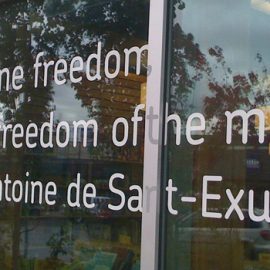
“Enjoy the little things in life, for one day you’ll look back and realize they were big things.”

- Kurt Vonnegut

{ 0 comments }

New year, new content

January 1, 2010

As part of my 2010 resolutions (ideas really, inspirations to help me have an even better year than the last one), I’m playing with syndicating content from other sites to be posted here on my blog. It’s not as though I’m not writing. It’s just that I don’t always capture it here. Thank you for your patience in my quiet period. If this works, the blog will get a bunch busier and may actually inspire me to update the look too. Happy New Year.

{ 0 comments }

…getting better

December 31, 2009

“It is only through labor and painful effort, by grim energy and resolute courage, that we move on to better things.”

- Theodore Roosevelt

(via reluctantbuddha via jackmorgan)

{ 0 comments }


From @deldino (via Did you ever have one of these days? on Twitpic)

)

{ 0 comments }

Bookcase Porn

December 28, 2009


Bookcase Porn

{ 0 comments }

Sweet Holiday Cheer

December 24, 2009

In what can be described as Twitter’s equivalent to “Norm” (for the youngins, a boisterous alcohol-related greeting offered a character on the Boston-based TV show Cheers), I recently posted this question:

Within minutes, 10 sets of instructions appeared in my stream. @9to5to9 pointed me to the recipe her husband learned in bartender school. @mrch0mp3rs suggested adding a little egg white to create froth. @espnguyen mentioned a splash of orange juice. @billives pointed me to The Food Network where Emeril Lagassi offers a simple whisky sour recipe. I was even asked questions about the ingredients we had at home because people had seen we weren’t going anywhere that day. And then this, which I adore (and didn’t try) from @rickladd:

In the end, I went with Emeril’s recipe, thanks to its simplicity and for some reason I trust Bill is a good judge of such things. And because Karl was so exhausted after clearing a path down our very long steep driveway, and was running a fever to boot, I postponed making the sour mix for a few days.

Now it’s all ready. Thanks to everyone who contributed. Here’s to sweet holiday cheer.

{ 0 comments }

eLearning vs ILT stats?

December 21, 2009

I received a call this afternoon from two strangers who found my name and number on the web, who were looking for some fast stats to use in a presentation for their department about the cost of elearning development as compared to instructor led training.

Caller ID said they were Florida based, and they refered to their department as the “Impact Learning Group.” They were asking about corporate education rather than higher ed, votech or govt.

After I asked if they had a twitter account (they did not), I offered to ask my twitter peeps the question and send them a quick reply tonight.

Within 5 minutes I received a slew of replies. Not one to pass up an opportunity to share what I learned, here are the results of my very unscientific poll. I welcome your additions.

@kkapp Try this link for hours difference of elearn vs ILT http://www.astd.org/LC/2009/0809_kapp.htm

@chambo_online $ for upkeep of tech offset by no physical overhead with online. Also the more it’s taught, the cheaper it becomes

@mrch0mp3rs We’re 50/50. I don’t find the 4x number that much at odd if you consider cost of upkeep.

[4x referring to a followup post guessing elearning probably costs 4x more to create]

@PrimaryEdTech if the hardw is in & teachers need 0 traing our costs=75% less than instructor led. That’s different for every context/case…

@fluffy_clouds However, key is that instructor-led is probably half the cost but no re-use, lasting resource so soon gets much more expensive 

@ColoradoFoothil This is the closest I can come to: $400 per course for online; Double a teacher’s salary for what is made in a year.

@DR1665 I think we run about a 4:1 ratio here. eLearning:classroom. Adobe connects running in next office all day, actually.

@ColoradoFoothil At ACC in Colo where I go it is about 65% to 35% - for credited courses. [Clarified with follow up that 65% is elearning, 35% instructor led.]

@JoeWehr 6 -16 X - ILT: 40 hrs for 1 day of content; eLearning: 80 - 160 hrs for 1 hr of content; 3 - 4 hrs of eLearning = 1 day of ILT

I also pointed them to Training Magazine’s annual report. (Summarized here by Karl Kapp. Karl offers some additional stats.) Don Clark also keeps a running list of various stats.

{ 0 comments }

from Garys Social Media Count

December 19, 2009


from Garys Social Media Count

{ 0 comments }

by Jim Collin, originally published in USA Today

Each time the New Year rolls around and I sit down to do my annual resolutions, I reflect back to a lesson taught me by a remarkable teacher. In my mid-20s, I took a course on creativity and innovation from Rochelle Myers and Michael Ray at the Stanford Graduate School of Business, and I kept in touch with them after I graduated.

One day, Rochelle pointed to my ferocious work pace and said, “I notice, Jim, that you are a rather undisciplined person.”

I was stunned and confused. After all, I was the type of person who carefully laid out my BHAGs (big hairy audacious goals), top three objectives and priority activities at the start of each New Year. I prided myself on the ability to work relentlessly toward those objectives, applying the energy I’d inherited from my prairie- stock grandmother.

“Your genetic energy level enables your lack of discipline,” Rochelle continued. “Instead of leading a disciplined life, you lead a busy life.”

She then gave me what I came to call the 20-10 assignment. It goes like this: Suppose you woke up tomorrow and received two phone calls. The first phone call tells you that you have inherited $20 million, no strings attached. The second tells you that you have an incurable and terminal disease, and you have no more than 10 years to live. What would you do differently, and, in particular, what would you stop doing?

That assignment became a turning point in my life, and the “stop doing” list became an enduring cornerstone of my annual New Year resolutions — a mechanism for disciplined thought about how to allocate the most precious of all resources: time.

Rochelle’s challenge forced me to see that I’d been plenty energetic, but on the wrong things. Indeed, I was on entirely the wrong path. After graduate school, I’d taken a job at Hewlett- Packard. I loved the company, but hated the job. Rochelle’s assignment helped me to see I was cut out to be a professor, a researcher, a teacher — not a businessman — and I needed to make a right-angle turn. I had to stop doing my career, so that I could find my real work. I quit HP, migrated to the Stanford Business School faculty and eventually became — with some remarkable good luck along the way — a self-employed professor, happily toiling away on my research and writing.

Rochelle’s lesson came back to me a number of years later while puzzling over the research data on 11 companies that turned themselves from mediocrity to excellence, from good to great. In cataloguing the key steps that ignited the transformations, my research team and I were struck by how many of the big decisions were not what to do, but what to stop doing.

In perhaps the most famous case, Darwin Smith of Kimberly-Clark — a man who had prevailed over throat cancer — said one day to his wife: “I learned something from my cancer. If you have a cancer in your arm, you’ve got to have the guts to cut off your own arm. I’ve made a decision: We’re going to sell the mills.”

At the time, Kimberly-Clark had the bulk of its revenues in the traditional paper business. But Smith began asking three important questions: Are we passionate about the paper business? Can we be the best in the world at it? Does the paper business best drive our economic engine?

The answers came up: no, no and no.

And so, Smith made the decision to stop doing the paper business — to sell off 100 years of corporate history — and throw all the resulting resources into the consumer business (building brands such as Kleenex), which came up yes, yes and yes to the same questions.

The start of the New Year is a perfect time to start a stop doing list and to make this the cornerstone of your New Year resolutions, be it for your company, your family or yourself. It also is a perfect time to clarify your three circles, mirroring at a personal level the three questions asked by Smith:

1) What are you deeply passionate about?
2) What are you are genetically encoded for — what activities do you feel just “made to do”?
3) What makes economic sense — what can you make a living at?

Those fortunate enough to find or create a practical intersection of the three circles have the basis for a great work life.

Think of the three circles as a personal guidance mechanism. As you navigate the twists and turns of a chaotic world, it acts like a compass. Am I on target? Do I need to adjust left, up, down, right? If you make an inventory of your activities today, what percentage of your time falls outside the three circles?

If it is more than 50%, then the stop doing list might be your most important tool. The question is: Will you accept good as good enough, or do you have the courage to sell the mills?

Looking back, I now see Rochelle Myers as one of the few people I’ve known to lead a great life, while doing truly great work. This stemmed largely from her remarkable simplicity. A simple home. A simple schedule. A simple frame for her work.

Rochelle spoke to me repeatedly about the idea of “making your life a creative work of art.” A great piece of art is composed not just of what is in the final piece, but equally important, what is not. It is the discipline to discard what does not fit — to cut out what might have already cost days or even years of effort — that distinguishes the truly exceptional artist and marks the ideal piece of work, be it a symphony, a novel, a painting, a company or, most important of all, a life.

Jim Collins is author of Good to Great and co-author of Built to Last.

via jimcollins.com

{ 0 comments }

If you want to know what we think is important, look at how we spend our time. If you want to know what we value, look at how we spend our money. If you want to know what we believe, look at how we live.

In his Pulitzer Prize-winning collection of poems, Robert Hass makes a similar point in the title poem, which he calls “Time and Materials.” Hass observes that life is a slow and gradual accretion of experiences. The goal, he writes, is..


To make layers,
As if they were a steadiness of days:

It snowed; I did errands at a desk;
A white flurry out the window thickening; my tongue
Tasted of the glue on envelopes.

On this day sunlight on red brick, bare trees,
Nothing stirring in the icy air.

On this day a blur of color moving at the gym
Where the heat from bodies
Meets the watery, cold surface of the glass.

Made love, made curry, talked on the phone
To friends, the one whose brother died
Was crying and thinking alternately,
Like someone falling down and getting up
And running and falling and getting up.


The implied question to which this poem responds is “What are you doing?” The answer is: falling down and getting up and running and falling and getting up. Making love, making curry, and talking on the phone to friends. Lives are not created in a dramatic instant or even over a spectacular week, like the world according to the book of Genesis. Rather, lives are laid down in layers, a gradual accumulation of actions.


-

Galen Guengerich in “A Steadiness of Days” (PDF)
All Souls Unitarian Church, New York City, June 1, 2008

Robert Hass, Time and Materials: Poems 1997-2005

{ 0 comments }

Perfect Pesto

August 23, 2009

Pesto August 09

As I made our second turn of pesto today I remembered that I had posted the recipe a few years ago and only needed to update it here. Oh, and add a picture of the real pesto chef in the family.

Originally posted July 2006: Our basil went crazy recently, producing a bumper crop. It allowed me to make enough pesto for a year, although we’re likely to have more basil at the end of the summer.

Here is a foolproof recipe I’ve worked out originally based on one in the Moosewood Cookbook. My first adjustment note is from 1994 although I’m pretty sure I began making it long before that.

4 cups of basil leaves and seed buds firmly packed

3 cloves of garlic (optional. This recipe is very good without any garlic, too)

1 cup walnuts, almonds or a mix of both

3/4 cup fresh parsley firmly packed, OR 1 cup dried parsley

3/4 cup fresh-grated Parmesan, OR 1 cup packaged Parmesan without any filler

3/4 cup olive oil

1/2 tsp salt (or to taste)

Young Pesto ChefCombine everything in a food processor and pulse for about 2 minutes until everything becomes a smooth paste.

The carefully fill 8 oz jelly-jars that have a tight seal. [Update: in the past I filled the jars almost to the brim but I now only fill them 2/3 of the way so when I'm ready to use the jar I have more room to pour in additional olive oil, making the pesto lighter and creamier.]

Store the jars in the freezer for up to two years. The taste changes a bit from the freezing but it’s still fabulous!! I know there is debate whether you should freeze pesto with the cheese in it, yet I know if I didn’t add it at the time I made it, I wouldn’t do it later and then the pesto could never be as good.

Each 4-cup turn of basil yields me 4 8oz jelly-jars & 1 smaller container. With this crop, I was able to make 10 jelly-jars full and 4 small containers to give as gifts.

During the year I put a jar in the refrigerator to thaw and then spoon out as much as I need for meals. Each jar lasts several weeks in the fridge. With my new method, as soon as the pesto defrosts I fill the rest of the jar with olive oil and then blend.

Before I discovered jelly-jars are the right quantity for our family, I filled several ice cube trays then froze them. Once hard, I dropped the cubes into ziptop freezer bags so I could thaw a cube or two at a time.

If you make this recipe or have variations I should try, please let me know in the comments below. Yum.

{ 3 comments }

“Performance reviews and training programs define the firm’s expectations. Financial reward systems reinforce them. Memos and communications highlight what’s important. And senior leadership actions — promotions for people who toe the line and a dead end career for those who don’t — emphasize the firm’s priorities.”

— Peter Bregman (A Good Way to Change a Corporate Culture, HarvardBusiness.org (via johntropea)

{ 0 comments }

Dear Clarke,

This week we went to the pool with Harper & Cynthia, and you walked right up to the big sliding board, and slid down into the pool as if you’d done it 100 times before (although you had never done it before). You then went down the slide three more times, smiling from ear to ear all the way.

After playing for a while, you asked if you could jump off the diving board. We swam all the way across the pool to get to the very deep area. You climbed out of the pool and stood in line with kids much bigger than you. Then you walked to the end of the board and jumped off. Again it was like you’d done it many times before. You then swam all the way to the ladder, much further than where I was waiting for you, and people all over the pool watched you in awe. You jumped off the diving board four more times and only left the area because your friends were having a snack. We swam back to the shallow end of the pool, had a snack (salami, apples, and zucchini bread) by the picnic table, and then returned to the slide again. If we could have stayed at the pool until bedtime, you would have. Me too.

Bike Shop Boy

Today we went to get the front wheel of your tricycle replaced, and while I was talking to the bikeshop owner, you began riding around the shop on a 2-wheeler (with training wheels) as if you’d done that many times before.

Although it’s still over a month before you turn 5 years old, it’s as if you’ve already crossed another big milestone: one where you are  confident in your body and you’re ready to try new fun things. Your dad and I (and all of your friends and their parents) are looking forward to playing with you and learning with you for many years to come. You ability to jump in and drive your own course inspires everyone around you.

Love,
Mama

Dear Kid Saturday

p.s. This is my first Dear Kid Saturday letter. It’s an idea inspired by Christine on her CutestKidEver blog. With all of these online tools, I’m not as good at recording your milestones as well as my mom did the old fashion way in my baby book and I hope this process helps me capture the little moments as well as the big ones.

{ 1 comment }

St. Louis Zucchini Bread

August 6, 2009

Clarke & The Zucchini
When I was growing up, my parents had a large suburban garden and they seemed to excel at squash. Butternut, acorn, spaghetti, patapan. If they could find seeds for it, they grew it and we learned to love it. Zucchini wasn’t my favorite (that was acorn), however I learned to make so many different recipes with it that it’s also a staple in my home. Today Clarke and I made four loaves (a double recipe) after we found several very large zucchini hiding in the garden.

This is my favorite way to prepare it and it’s still my favorite zucchini bread recipe. I call it St. Louis Zucchini Bread because I grew up there and because my mom, a serial recipe clipper, first found it in the local newspaper. We’ve made several changes over the years, but memories of St. Louis remain at its core.

3 eggs
1 cup light olive oil (you can substitute any light vegetable oil)
1½ cups turbinado sugar (or 2 cups granulated sugar)
2 cups grated raw zucchini squash, as dry as possible*
1 tsp vanilla
3 cups white whole-wheat flour (all-purpose flour works too)
1 tsp baking soda
½ tsp baking powder
1 tsp salt
2 tbsp cinnamon
1 ½ tsp ground clove
½ cup walnuts (optional)
½ cup ground flax seed (optional)
½ cup raisins (optional)

Other Options: Over the years I’ve also substituted the sugar for 1½ cups loosely packed brown sugar and the zucchini squash for grated raw butternut squash.

Preheat oven to 325 degrees. Beat eggs until light and foamy. Add oil, sugar, zucchini and vanilla; mix lightly, but well. In a separate bowl, mix flour, baking soda, baking powder, salt, and cinnamon. Add flour mixture to egg mixture; blend. Add nuts/raisins/seed. Pour into two greased and floured loaf pans. Bake in preheated 325-degree oven for 1 hour, or until done. Cool on rack. Bread may be frozen. Yields 2 loaves.

*Although we traditionally grate the zucchini by hand, producing the driest result (and therefore a less mushy bread that keeps longer), very big zucchini sometimes has an odd texture, sort of spongy, which can be put into a Cuisinart using a pulsing action to keep it from getting wet. If your zucchini accidentally gets slushy once it’s cut up, you can dry it between several paper towels. Simple and effective.

The original recipe appeared in the St. Louis Post Dispatch April 9, 1975 and was developed by Kathy Germain, a dietetic intern at St. Louis University.

I am a Food RENEGADE!

{ 3 comments }

Social media. Random factlets. Video. Well designed. What’s not to like?

{ 1 comment }

Simple Fruit Sorbet

July 30, 2009

2009 Berries Berry Sorbet

When a friend commented recently that one of her young sons won’t eat fruit, I mentioned we don’t only eat fruit fresh and frozen. We also make fruit leather and sorbet. My hunch is that her son might enjoy one of those. Here’s our recipe for fruit sorbet so simple that our 4 1/2 yr old can do most everything on his own. With another bumper crop of berries this year, he’s had frequent practice.

Fruit Sorbet Recipe

2 cups frozen fruit. We’ve tried most every kind of fruit. They’ve all worked. We often freeze it ourselves and we have also made this with store-bought frozen fruit. To freeze fruits wash, slice, remove the pit (if appropriate), and set the slices on a tray in the freezer before transferring to a sealed contain. Slices and berries (grapes, too) usually freeze within an hour. Melon ballers also make great fun out of larger fruits.

1/4 cupish turbinado sugar or similar raw sugar. We’ve also tried with honey and molasses, but they just don’t create the right texture and they harden too hard when frozen.

1 Tablespoon lemon or lime juice.

Throw all of it into a food processor, blend until smooth. Eat.

We often eat it all right then, but you can also put it into small plastic containers with lids. We recycle the containers we get spices in from the local Cheese Shop and stack them in the freezer for instant ready snacks in the days ahead. You could also consider rinsing out a store-bought cardboard ice cream pint container. Glass containers get too cold.

I make several variations of this recipe, but at it’s most basic, this always works and it works really well. If you are NOT going to freeze, you can cut out almost all of the sugar. If you are going to freeze, it’s needed to keep the sorbet from solidifying. I have also tried adding 1 teaspoon of vodka (really) when I want to skip the sugar and I’m not making it for kids. The alcohol also keeps it from freezing. Frankly, I like the little bit of sugar better. And if we know we’re going to eat it right away, just fruit and lemon juice rocks.

A few weeks ago I also tried a batch with a Tablespoon of goat milk powder and that added a wonderful creaminess. It wasn’t nearly as fruity, but it froze well and was very good. The myriad of books I’ve read while finding the perfect mix (starting with fancy recipes and seeing what I could cut out) suggest you steer clear from any other liquid than the lemon juice because it freezes poorly… but ours is just a big test kitchen learning lab so we’ll continue to try new approaches.

Have fun!

I am a Food RENEGADE!

{ 1 comment }

Create a Learning Culture | Fast Company:

Companies that value learning outperform those that don’t. A study by independent research firm McBassi & Company shows that it pays to invest in people-focused practices including building learning capacity, knowledge accessibility, and professional development. Institutions that demonstrate the greatest commitment to their human capital seem to enjoy the greatest financial rewards…

Read the full article, by Marcia Conner June 2005, on the Fast Company website.

{ 0 comments }

Twitterclass

Trying to convince your Learning & Development department there’s a place for Twitter (or enterprise-weight counterparts) in your plans? Here are a few articles that address this growing trend.

If you know of pieces I haven’t included here, please add them with a link to the comments section or contact me directly. I’ve begun writing about this specifically and will include new articles in the coming months.

Enterprise Micro-Learning” by Marcia Conner. Fast Company. October 12, 2008

Learn More With Less: Corporate Education in the Current Economy” by Marcia Conner. Fast Company. November 30, 2008

Twitter As a Learning Tool. Really.” by Pat Galagan. ASTD T+D. March 2009.

The Truth About Twitter” by Dave Wilkins. The Social Enterprise Blog. May 11, 2009

65 Tips for Getting the Most Out of Your e-Learning Budget (ebook)” edited by Marcia Conner. The eLearning Guild. May 26, 2009.

—–

For real-time learning about how microsharing is working inside corporate training, learning, and development, consider joining #lrnchat each Thursday night.

[Note: I'm certain I've missed some gems and I will add them as I find them. There  are several articles in the works for big magazines and as I said before, I have a few in draft form that will be published this summer. There are also ample blog posts about social media in corporate L&D and Twitter in education. Let's consider this the beginning of a terrific conversation and place for all of us to learn.]

{ 0 comments }

Twitterclass

Trying to convince your Learning & Development department there’s a place for Twitter (or enterprise-weight counterparts) in your plans? Here are a few articles that address this growing trend.

If you know of pieces I haven’t included here, please add them with a link to the comments section or contact me directly. I’ve begun writing about this specifically and will include new articles in the coming months.

Enterprise Micro-Learning” by Marcia Conner. Fast Company. October 12, 2008

Learn More With Less: Corporate Education in the Current Economy” by Marcia Conner. Fast Company. November 30, 2008

Twitter As a Learning Tool. Really.” by Pat Galagan. ASTD T+D. March 2009.

The Truth About Twitter” by Dave Wilkins. The Social Enterprise Blog. May 11, 2009

65 Tips for Getting the Most Out of Your e-Learning Budget (ebook)” edited by Marcia Conner. The eLearning Guild. May 26, 2009.

——-

For real-time learning about how microsharing is working inside corporate training, learning, and development, consider joining #lrnchat each Thursday night.

[Note: I’m certain I’ve missed some gems and I will add them as I find them. There are several articles in the works for big magazines and as I said before, I have a few in draft form that will be published this summer. There are also ample blog posts about social media in corporate L&D and Twitter in education. Let’s consider this the beginning of a terrific conversation and place for all of us to learn.]

{ 0 comments }

A local friend of ours thinks she might be near a Trader Joe’s this coming weekend while she’s traveling. She’s never been in a Trader Joe’s before but she’s heard us go on and on and on.

We created this list of favorites she might consider purchasing for her own family and in the hopes that if she does stop, she’ll consider doing a little shopping for us too. [I've updated this list recently for another friend, a native California now living here between the mountains in Virginia far far from a TJs, who was excited to learn they litter communities on the East Coast larger than ours.]

Trader Joe’s Shopping List

Trader Joe’s Dried Fruit

Trader Joe’s Dried Pineapple Rings, Unsweetened & Unsulfured (12 oz)

Trader Joe’s Just Mango Slices, Unsulfured & Unsweetened (6 oz)

Trader Joe’s Dried Fruit Nothing But… Banana, Flattened (4.4 oz)

Trader Joe’s Dried White Peaches (16 oz)
[contains sulfur, but no sweetener]

Frozen Foods

Trader Joe’s Frozen Mango chunks (24 oz)

Biryani Curried Rice Dish, fat free, vegetarian 16 oz

Butternut squash, cut and peeled [clear bag]

Pot stickers [clear bag with blue logo]

Requiring refrigeration

Trader Joe’s Goat Milk Brie 4.4 oz

Trader Joe’s Les Salades du Midi “Mache ado about something” (lamb’s lettuce) 4 oz

Nitrate free salami [don't have a pkg right now to read the label for specifics]

Any of their hummas and bean dips

Miscellaneous not requiring cool conditions

Trader Joe’s Almond Butter, Raw Creamy unsalted, 16 oz [while we prefer the unsalted, all of their nut butters are excellent and often cost considerably less than their counterparts in local supermarkets]

Trader Ming’s Kung Pao noodles & sauce, 11.6 oz  [near soups]

Trader Ming’s Peanut Satay noodles & sauce , 11.6 oz  [near soups]

Calbee Snack Salad Snapea Crisps – Original Flavor baked. (We now get these from Amazon.com but we got them first from Joe)

Trader Joe’s Natural Buffalo Jerky, Sweet & Spicy

Trader Joe’s Thai Green Curry Simmer Sauce,  12 oz jar

Trader Joe’s Cuban Mojito Simmer Simmer Sauce, 12 oz jar

Trader Joe’s Organic Creamy Tomato Soup [in a red carton with a pour lid]

Trader Joe’s Ginger broth [in a brown carton with a pour lid]

Trader Joe’s Organic Blueberry fruit spread, 10 oz jar

Trader Joe’s Organic Morello Cherry fruit spread, 10 oz jar

Trader Joe’s Organic Strawberry fruit spread, 10 oz jar

Trader Joe’s Citron (yuzu) fruit spread, 10 oz jar

Trader Joe’s Ginger & Almond granola [yellow box]

Although we don’t care for it, many people enjoy:

Charles Shaw Chardonnay (“2 buck Chuck”) [$3 on the East Coast]

image

Related

If you’re interested in their very large assortment of gluten-free products see this product list.

Read some interesting stuff about the benefits of Fruits and Vegetables as well as the wonders of Fats.

Fascinating article about the Trader Joe’s culture from Slate Magazine.

What are your favorites? I’d love to hear what you get when you go to Trader Joe’s. Please add your comments below.

{ 0 comments }